 bg
bg
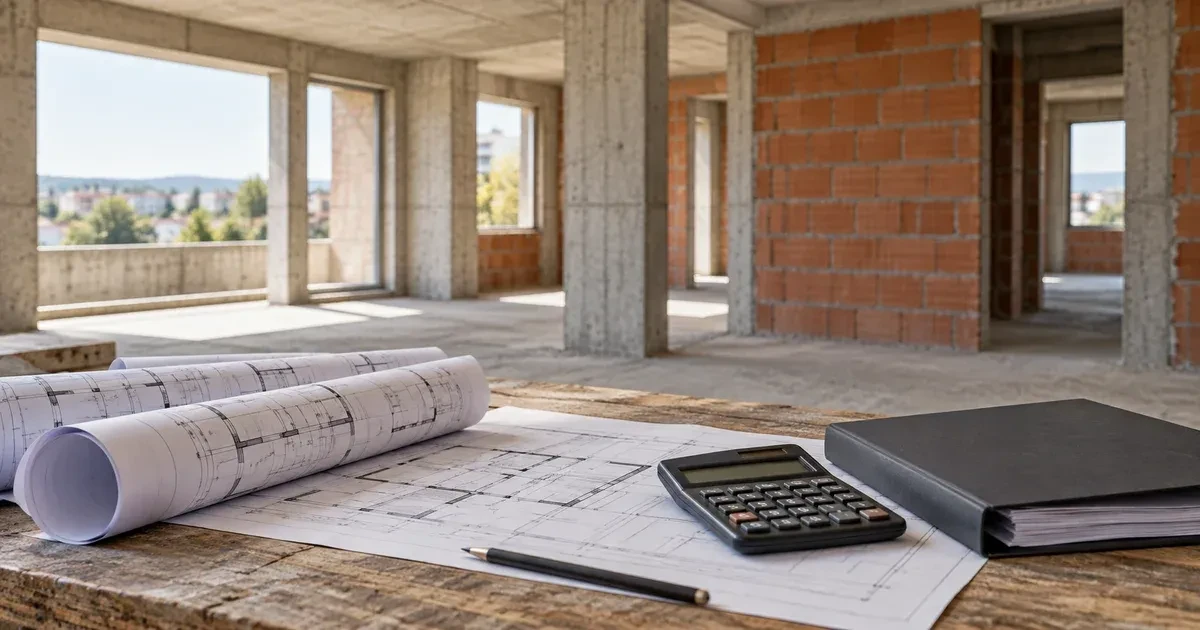
A mortgage can finance an off-plan apartment in Bulgaria, but an approved amount does not mean the bank will release it for the seller’s first instalment. Funding depends on the development, security and drawdown conditions. Before signing the preliminary agreement, match every payment due with the date on which the money will actually be available.
“Can I afford this apartment?” and “Can I pay every instalment on time?” are different questions. A positive answer to the first does not settle the second. With a home under construction, a cash shortfall can arise months before ordinary mortgage repayments begin.
At what construction stage can mortgage funds be released?
No single construction document obliges all banks to lend. The mortgage product, legal status of the property and proposed security all matter. Having Act 14 is not, by itself, a credit approval.
Some products explicitly allow financing at Act 14. For example, Tokuda Bank’s Home Under Construction product concerns unfinished residential properties whose construction is financed by that bank. That qualification matters: the product does not establish that every apartment with Act 14 is eligible. Nor does it confirm that Magnolia or another particular development participates.
For your purchase, obtain separate answers on your income and the selected property. Provide the draft preliminary agreement, payment schedule and available construction documents. An assessment based only on salary and requested loan size does not answer when the seller can receive the money.
Why the ownership transfer and mortgage security matter
A preliminary agreement governs a future transaction; it does not itself transfer ownership. See Articles 18 and 19 of the Bulgarian Obligations and Contracts Act. With a property under construction, establish what is to be transferred, at what stage and how the mortgage will be created. These questions require coordinated checks by the lender, notary and your lawyer, not an assumption based on the phrase “after Act 14”.
Bulgarian law distinguishes a transfer of building rights from a transfer of a building or separate parts after rough construction has been reached. Article 181 of the Spatial Development Act addresses this stage. Act 14 records acceptance of the structure but is not the entire document set required for a particular transfer. Source: Spatial Development Act, published by the Ministry of Regional Development.
If the property or development is already mortgaged for construction finance, ask how your unit will be released from that security and how the payments will be coordinated. Such a mortgage does not automatically make a sale impossible. It also does not disappear merely because you have paid. The mechanism must be documented.
Identify the cash gap before the first drawdown
Build a schedule by date and milestone. Against each seller payment, record the funding source and the conditions under which it becomes available. Keep savings already held separate from uncertain future receipts, such as an expected sale of another home.
The following illustration is not Magnolia’s payment plan or a bank offer. Assume a €150,000 price, with 20% payable on signing and a further 30% at the next stage. Assume the bank’s first drawdown is possible only after those payments.
| Position before the first bank drawdown | Amount |
|---|---|
| First instalment: 20% of €150,000 | €30,000 |
| Second instalment: 30% of €150,000 | €45,000 |
| Total due by that point | €75,000 |
| Own cash available towards the price | €35,000 |
| Unfunded gap | €40,000 |
Even if the eventual loan covers a substantial share of the purchase, this schedule leaves €40,000 missing at a specific moment. Transaction costs and your personal emergency reserve are outside the calculation. A higher future salary does not meet today’s deadline.
A solution may involve a different agreed payment schedule, a different financing structure or another confirmed source of funds. Do not automatically assume an unsecured loan will bridge the gap: taking on new debt may affect the mortgage assessment. Nor should you assume the lender will reimburse amounts already paid unless it expressly confirms that arrangement.
Avoid double-counting. Instalments you pay from your savings already contribute towards your equity in the purchase price. They should not be added to that same contribution again as if they were a separate expense. Taxes, fees and other genuine additional costs are separate.
Where two partners provide the money, discuss how their contributions relate to ownership. That is a separate question from bank drawdowns, addressed in the guide to buying together without marriage, in Bulgarian.
How staged drawdowns affect payments to the lender
A tranche is a separate release of part of the approved loan. There may be several releases rather than one, each subject to specified conditions. Ask which document is required, whether another valuation is needed, how much can be released and how long processing normally takes under the proposed arrangement.
Obtain a payment illustration for the first drawn amount and for the period after later drawdowns. A calculator showing the final monthly repayment is not an adequate description of every payment during construction.
Check whether interest is charged on the principal actually drawn, whether there are charges on undrawn funds and what additional valuations, account fees and insurance cost. A principal grace period does not mean free borrowing. It postpones principal repayments under the contract but may leave interest and other costs payable.
Tokuda’s cited product, for example, offers the possibility of up to 12 months’ principal grace from the loan agreement date. That is not a promise that the grace period will last until any building is completed. The starting date matters as much as the advertised duration.
Make sure the purchase and loan agreements work together
Both agreements must be capable of being performed at the same time. If the seller expects payment immediately upon a construction milestone but the lender needs an additional review, the contract needs a workable interval. “The bank will pay then” is not a sufficient arrangement.
Before signing, clarify in writing:
- the documents required for each drawdown;
- the seller’s payment deadline after the relevant milestone;
- when your own contribution must be paid;
- what happens if the valuation or approved loan is lower;
- how construction or funding delays will be handled.
Not every mismatch can be solved with a slightly larger reserve. Sometimes the contractual payment structure itself needs to change. That discussion is easier before you pay a sum subject to restrictive refund terms.
A construction delay can also affect banking deadlines
Review the drawdown deadline, approval validity and end of any grace period alongside the anticipated commissioning date. They may fall at different times. Delayed construction does not automatically amend your obligations under a signed loan agreement.
Ask the lender in advance how an extension would be considered. Would it require another decision, updated income documents, a valuation or an amendment? Separately, calculate extra rent and loan payments if you cannot move in when originally planned.
For a specific purchase, start with the available Magnolia apartments. Request the current stage, draft agreement and payment schedule for your chosen unit, then present them together to the lender. Whether those documents fit together will determine whether the purchase is financially workable for you.
Checked on 5 October 2026. All figures are illustrative. This article does not confirm a partner bank, construction stage or payment schedule for Magnolia and does not replace individual legal or mortgage advice. Linked Bulgarian sources may not have English versions.
Frequently asked questions
No. It does not replace the lender’s assessment of income, property, development and security. The bank must confirm that the particular purchase is acceptable and state its release conditions.
Some lending structures allow this, subject to valuation and lender acceptance. If you consider using a family home as additional security, assess the risk to that property as well as the benefit of earlier funding.
You can seek another lender, but a fresh application takes time and does not itself alter the seller’s deadline. Do not treat switching banks as a guaranteed backup for a payment falling due soon.
Only if the available money also covers every instalment due before bank funds can be accessed. Allow separately for transaction expenses, finishing works and a delay reserve.

Vladimir Kolev is the CEO of TV Property and an entrepreneur in the field of residential and investment properties. He graduated in Economics and Mathematics from the University of Bath and Sofia University and has practical experience in the development of distinguished residential projects in Sofia and along the Black Sea coast.